Level Designer

Zoomopoly
For Zoomopoly I mainly focused on coding to work with the scene and canvas setup, with asset integration. Ensuring that all components functioned cohesively and reliably.
I also gained a deeper knowledge of how scripting integrates seamlessly with gameplay mechanics, user interfaces, and in game features. This project not only sharpened my technical skills, but also strengthened my ability to manage complex features, troubleshoot issues, and to write clean code.
Zoomopoly Gameplay

Moving Player Script

Property Code
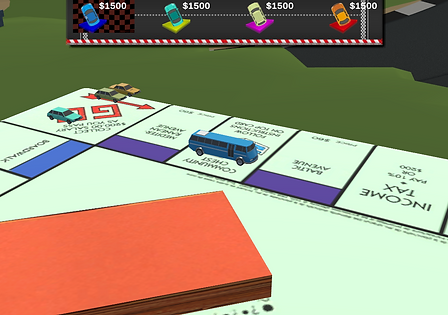
The board
Designed core systems that work well with each other, with the main focus being my code and it working seamlessly with my canvases, scenes and prefabs.
-
Time management and problem solving: Managed the delicate balance of scripting, assets, and troubleshooting code while staying on schedule. Encountered and overcame issues, significantly improving my problem solving skills in the context of game development.
-
Refinement and testing: Once the core mechanics were established, I focused on refining the entire experience by conducting numerous testing to ensure seamless functionality and interaction.
The Board

Speed Cars
After implementing the dice roll, I moved on to scripting the movement of the cars. Once the dice was rolled, the car needed to move a corresponding number of spaces. Bringing life to the board and movement that would be smooth.
-
Dynamic camera work and feedback: Integrated an overhead camera shot to follow the car’s movement, giving players a comprehensive view of the car’s path. A canvas would then display the card and the space the car would land on, allowing players to anticipate their next move and outcomes.
-
Improving movement fluidity: Initially, the car would jump between spaces, which didn’t feel natural. Through research and trial and error, I figured out how to make the car smoothly transition from one space to the next, simulating a realistic driving effect. This adjustment added immersion and enhanced the player’s experience.
Cars View
Property
The property cards added another layer of complexity to the game. Each card needed to have different pricing, unique artwork, and specific values that would affect the game.
-
Designing property cards and board integration: The property cards added complexity, requiring unique artwork, pricing, and values to be tied directly to the game. So I assigned each card to a corresponding space and number on the board, so that when a player landed on a space, they would receive the card, with only its value assigned initially.
-
Display logic and dynamic content: Created a system that checks which card a player receives and dynamically displays the correct details on the card, ensuring the information is updated properly when a player lands on the property space.
-
Ownership and payment mechanics: Implemented a system where only one player could own each card, preventing multiple players from acquiring the same property. This system also included a payment mechanic, where a canvas would appear if a player landed on an owned property, detailing the payment owed to the owner similar to Monopoly's mechanics. This involved scripting the payment logic to track ownership and payments accurately.
Board Property View
